
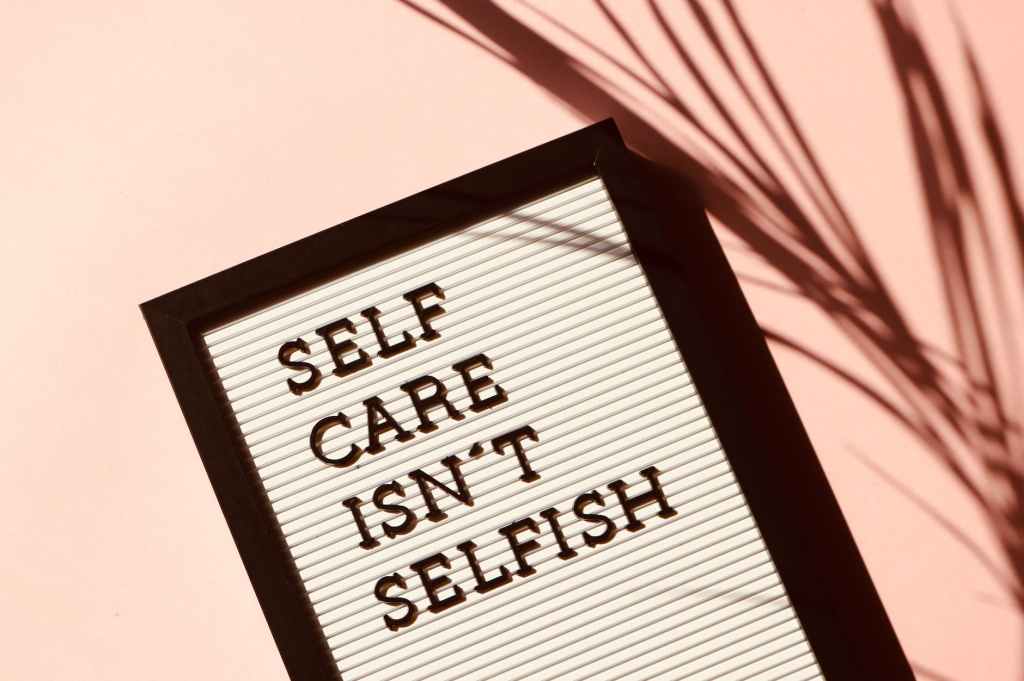

Mention the word self-care at church and you are often met with blanks stares or strong words of protest that scripture doesn’t support self-care. Yes, self-care can be taken to extremes and go off the rails. But please don’t get on your theological high horse and tell me there is not a place for it in a Christian’s life. I find it interesting that most followers of Jesus don’t seem to notice two important words when He gave the two greatest commandments. The first is to love the Lord your God with all your heart, soul, mind, and strength and second to love others as yourself. Did you catch those last two words “as yourself”? Why didn’t Jesus just end it with and “to love others”? The words “as yourself” may not directly teach self-care but it certainly implies it.
Jesus taught about rest and modeled it in His own life and cared for His disciples’ well-being. He also addressed matters of emotional and mental health and taught us how to overcome worry and anxiety. Ephesians 5:29 says, “For no one ever hated his own flesh, but nourishes and cherishes it, just as the Lord does the church.”
Motivation is the key when it comes to self-care. Self-care can be described as being mindful of your own limits and needs so that you can ensure your own physical, emotional, and mental well-being. In other words, recognize your limitations, and practice good stewardship of your body and mind.
The caring for our bodies and minds should not come from a self-centered mindset. Instead, it as an act of worship to God. In1st Corinthians 6 we are taught that our bodies are not our own; we were bought with a price to be temples of the Holy Spirit. It is for this reason that we “present our bodies as a living sacrifice” I’m just sayin, but that means that our temples should be treated right.
When we exercise and eat healthy, get good sleep and understand the connection between body, mind, and soul, and act as good stewards of the gifts God has given us—our bodies and minds, we understand that we are God’s masterpiece, His workmanship, created in Christ Jesus to good works”. Don’t allow the world’s self-care movement to twist the meaning of a biblical basis for self-care. Don’t fall into the trap that somehow, we have the power within to heal ourselves. We don’t. The gospel teaches that that true life, power and healing can only come through a relationship with Jesus Christ! Only He can provide true satisfaction, significance, security, and can sustain us.
Practicing good self-care habits indeed provides positive benefits. We must realize and remember though that the one thing that is needed above anything else— is to adopt Mary’s posture and simply sit at the feet of Jesus and enjoy all that He is for us.
The secular self-care movement may provide helpful techniques, but the motive and mindset doesn’t ring true. We may change our personal habits, but those changes don’t result in true life. What we need is a deeper and greater source of life, joy, and peace, which is found in Jesus alone.


 The Rest Stop
Leave a reply to Gabriel Schiada Cancel reply